Every percentage on Atheron Progress is counted. Nobody types it in. That one rule moves the whole argument about progress to a single place: the mark on each module.
This article is about that place. If you want to know how much to trust a number on the tracker, look at how the marks underneath it are set.
Numbers you cannot nudge
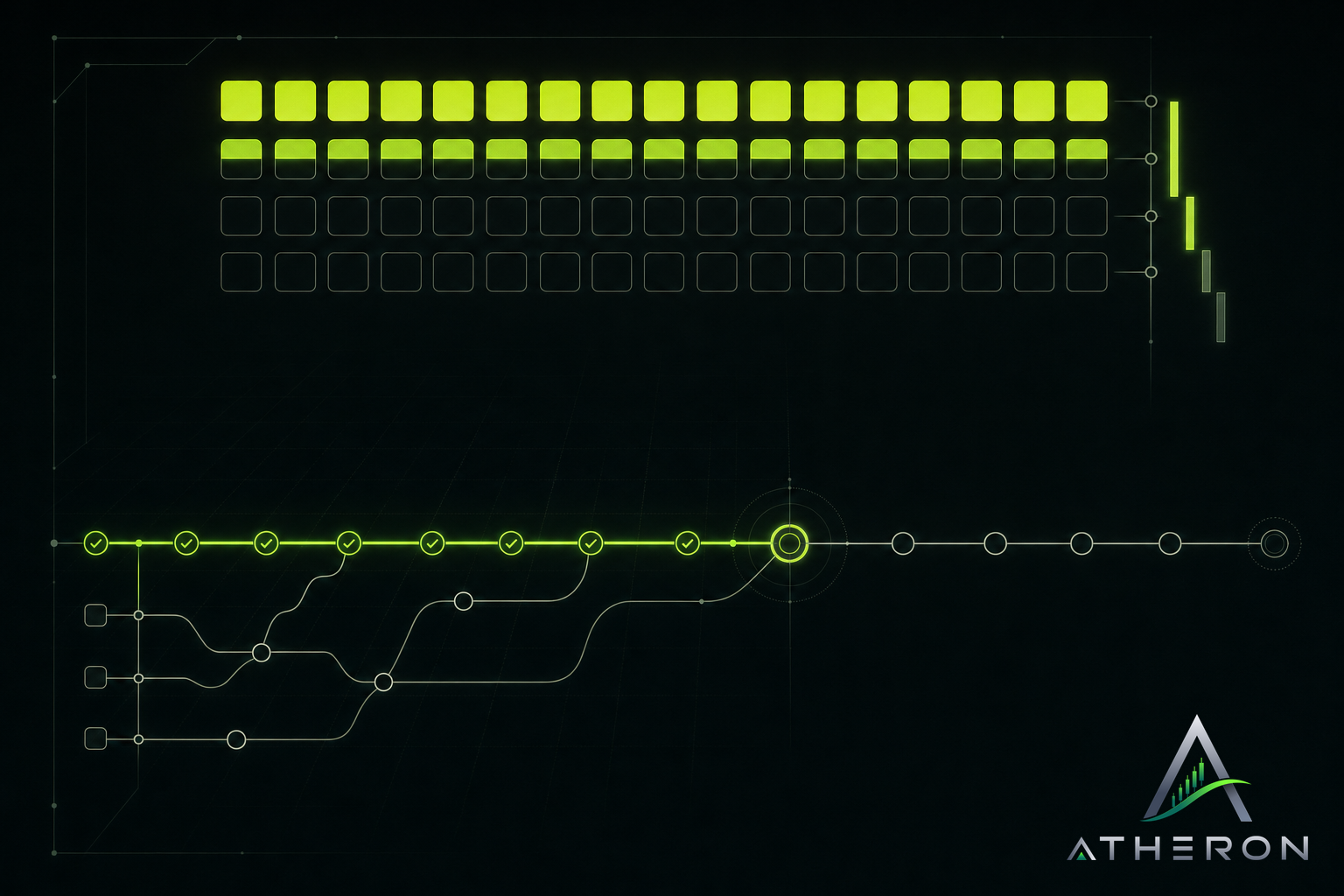
Each project is split into modules. Each module carries one of four marks: shipped, building, next or later. The percentages you see are worked out from those marks.
That has a useful side effect. There is no field where someone can write a hopeful figure because a release feels close. If a project looks further along this fortnight, it is because a mark changed. If no mark changed, the number cannot move.
So when we decide whether a piece of work is shipped, we are not deciding a label in isolation. We are deciding what the public number says.
The test is use, not effort
Shipped means somebody uses it today. That is the whole test.
It rules out a lot of things that feel like finishing:
- The code is written and reviewed.
- It passes its checks.
- It is merged and deployed.
- A demo works.
All of those matter. None of them is use. A module can tick every box on that list and still be marked building, because nobody relies on it yet. The moment someone does, it can move.
We use this test because it is the one you can check from the outside. Effort is invisible to you. Whether something is in use is a fact about the world.
A percentage built from use tells you what exists for people now. A percentage built from effort tells you how busy we were.
What the other marks are for
The other three marks are not lesser versions of shipped. They say different things.
- Building means work is under way and nobody depends on it yet.
- Next means it is planned to start after the current work.
- Later means we intend to do it, without a near place in the queue.
Keeping these honest matters as much as keeping shipped honest. A module sitting at building for a long time is information. It tells you something is harder or slower than expected, and we would rather you see that than see it hidden behind a vague label.
Where the mark is recorded
The changelog and the roadmap are the record. When a mark moves, the changelog is where you can see the work behind it. The roadmap shows what sits at next and later.
If a number on the tracker surprises you, the path to check it is short. Find the module, read its mark, then read the changelog entries that led there. You should not need to take our word for any figure.
Why this applies across very different projects
The four projects on the tracker are not alike. Atheron Trading is paper only until launch. ATON Blockchain is its own body of work. ATON Desk is marked coming soon. Atheron Network Labs is open for projects.
The same test runs across all of them. That is the point of using one plain question rather than a judgement per project. You can compare marks across projects knowing they were set by the same rule, and you can compare the percentages knowing they were counted the same way.
The limits, stated plainly
A counted percentage is honest about what it measures, and that is also its limit. Every module counts as one mark. A small module and a large one weigh the same in the count. So a figure tells you how many pieces are in use, not how much effort remains.
The tracker also shows what we have built, computed from our repositories. It does not show plans that live nowhere else. And whether a public service is up is a separate question, answered on the status page with ninety days of history.
If you read the tracker with those limits in mind, the numbers do what we built them to do. They follow the marks, and the marks follow use.