When a module on Atheron Progress turns to shipped, it is because one question got a yes. Is somebody using it today?
That is the whole test. This piece explains why we keep it to a single question, what it leaves out on purpose, and how you can check our answer without taking our word for it.
Four marks, not a sliding scale
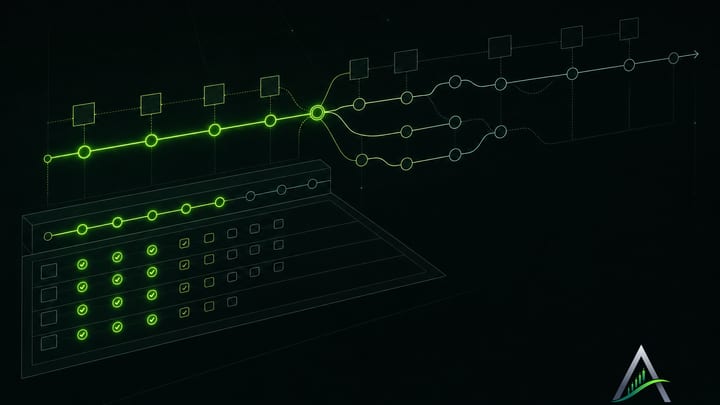
Every project on the tracker is split into modules. Each module carries one of four marks:
- shipped: somebody uses it today
- building: work on it is under way
- next: it comes after what is being built now
- later: it is planned, but not soon
There is no "nearly shipped" and no "almost there". A module sits in one state or another. That keeps the decision small. We are not judging how hard the work was or how much of it got done. We are answering a yes or no question about the world outside our repositories.
Why the percentage cannot be typed
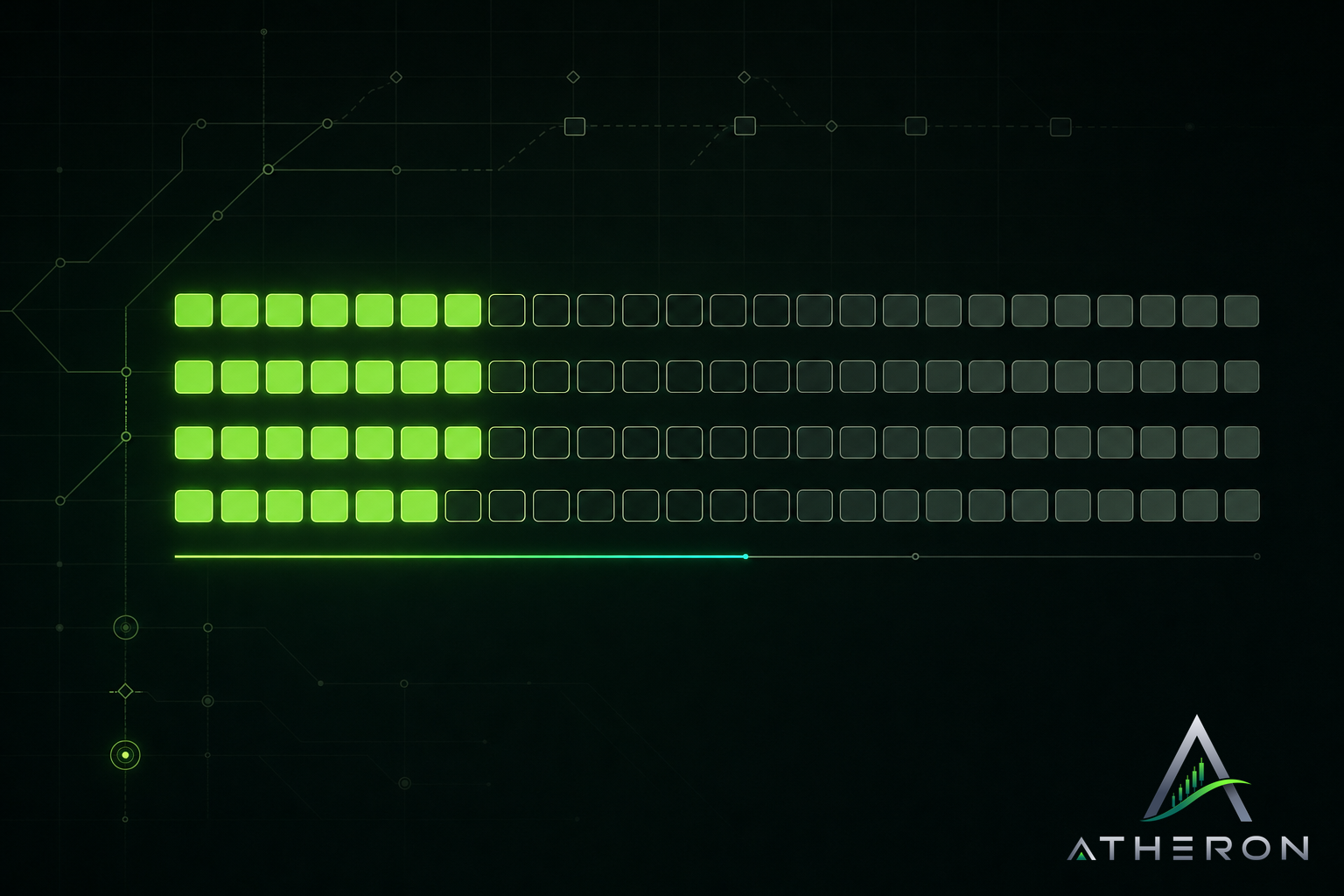
The percentages you see on each project are counted from those marks. Nobody types them in. If more modules on a project are marked shipped, its figure goes up. If none move, the figure stays where it is, however busy the fortnight felt.
This is what holds the rule in place. If we could type a percentage, there would always be a pull to round up. Because the number is computed from the marks, the only way to move it is to move a module. The only way to move a module to shipped is for somebody to be using it.
So the arithmetic and the definition protect each other. You cannot inflate one without breaking the other.
What does not earn the mark
A lot of real work stops short of shipped. That is normal, and it stays marked building until the question gets a yes. On their own, none of these are enough:
- code that has been written
- code that has been merged
- a feature that works in a demo
- a date on the roadmap
Each of those is a step. None of them puts the work in someone's hands. We would rather show a module as building for longer than show it as shipped before anyone can use it.
How it reads across our projects
The same rule applies to every project, and it means the tracker sometimes shows less than you might expect.
Atheron Trading runs on paper only until launch. We publish no performance figures for it, and nothing on the tracker suggests otherwise. ATON Desk is marked coming soon. Atheron Network Labs is open for projects. ATON Blockchain is tracked the same way as the rest.
In each case the marks reflect where the project stands, not where we would like it to be. If that makes a figure look modest, the figure is doing its job.
Check it yourself
You do not have to trust the marks. Two things on the site let you test them.
The changelog and the roadmap are the record. When a module changes state, that change belongs in the record, so you can see what moved and when.
The status page shows each public service with ninety days of history, each day coloured by its worst event. If a shipped module is part of a public service, that history tells you whether the service people use has actually been up.
The honest limit
The rule tells you that somebody uses a module today. It does not tell you how many people use it, or how happy they are with it. A shipped mark is a floor, not a verdict on quality.
We accept that limit because the alternative is worse. A broader definition would let us show bigger numbers sooner. A narrow one means that when the figure goes up, you can believe it.